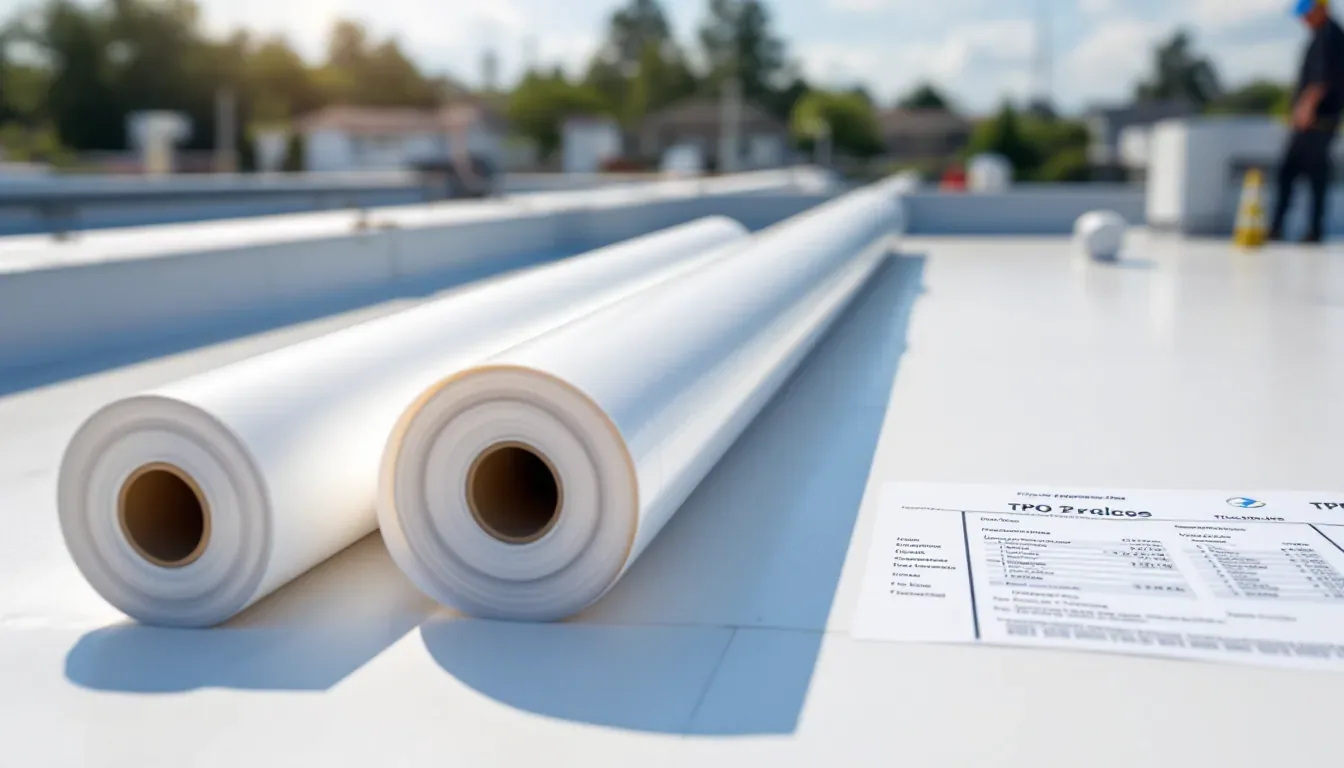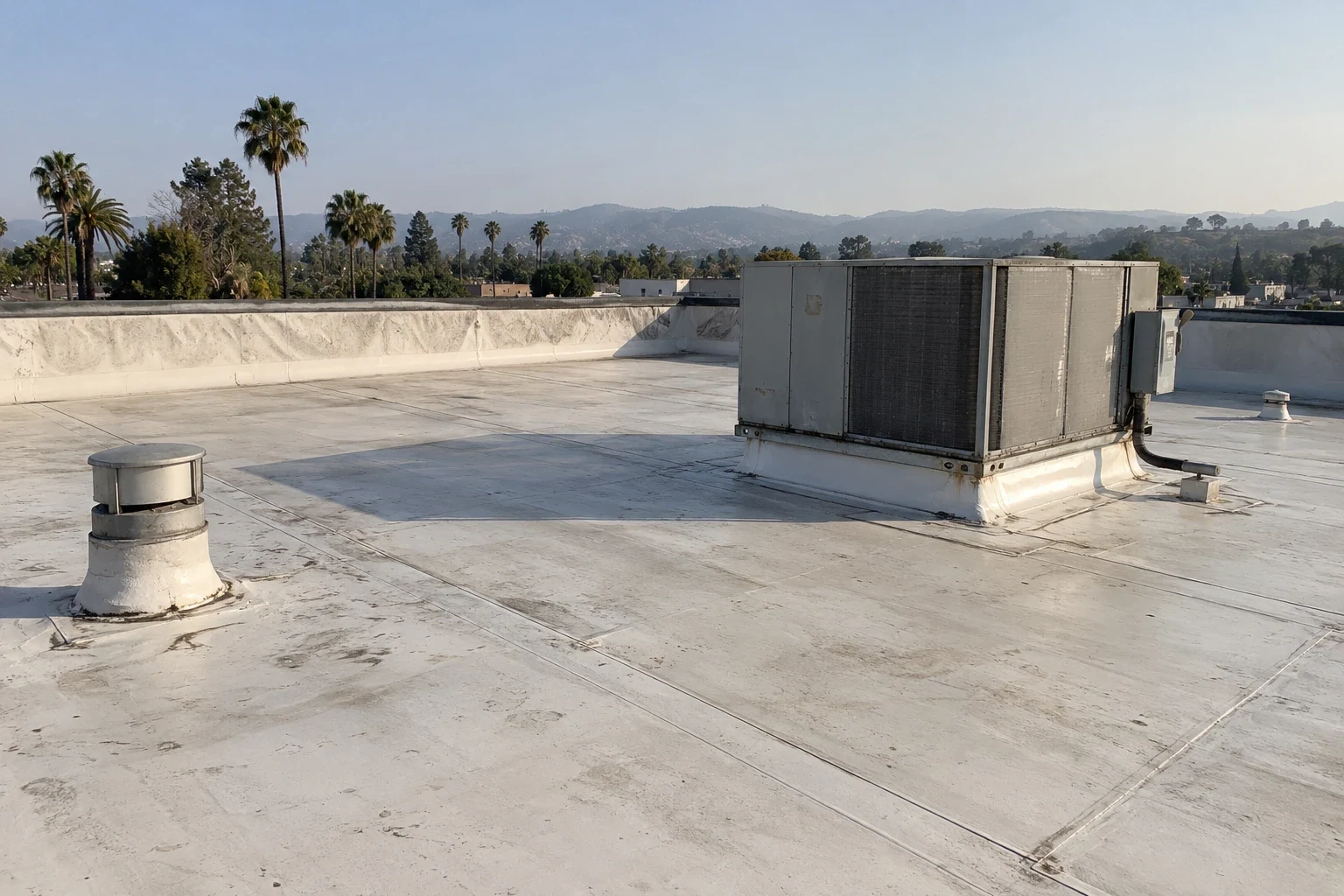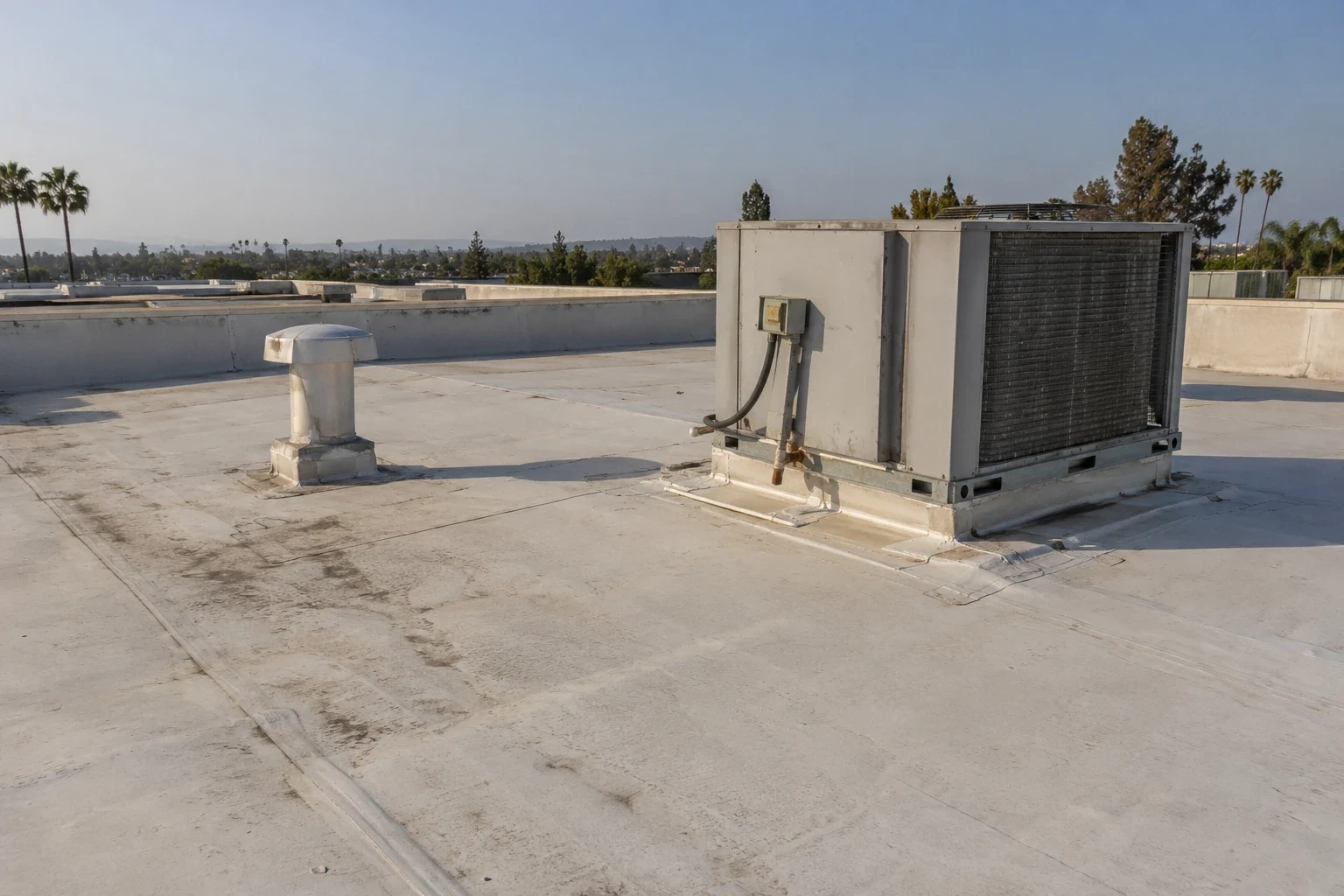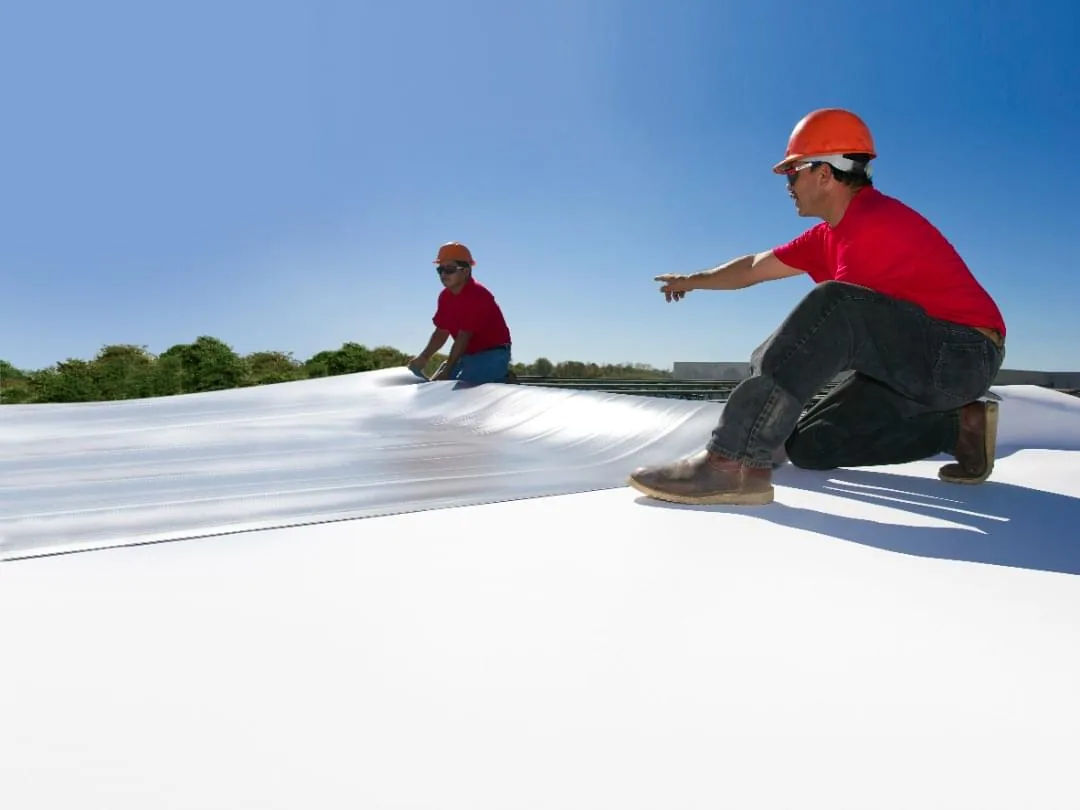
A manufacturer name matters after the roof assembly and the owner's decision are clear. We identify membrane, attachment, substrate and repair history before selecting compatible material. A substitution that ignores those conditions can create a weak seam or unserviceable transition. Carlsbad's surface-moisture patterns make preparation and closure worth documenting, while the specific roof remains the basis for the material choice.
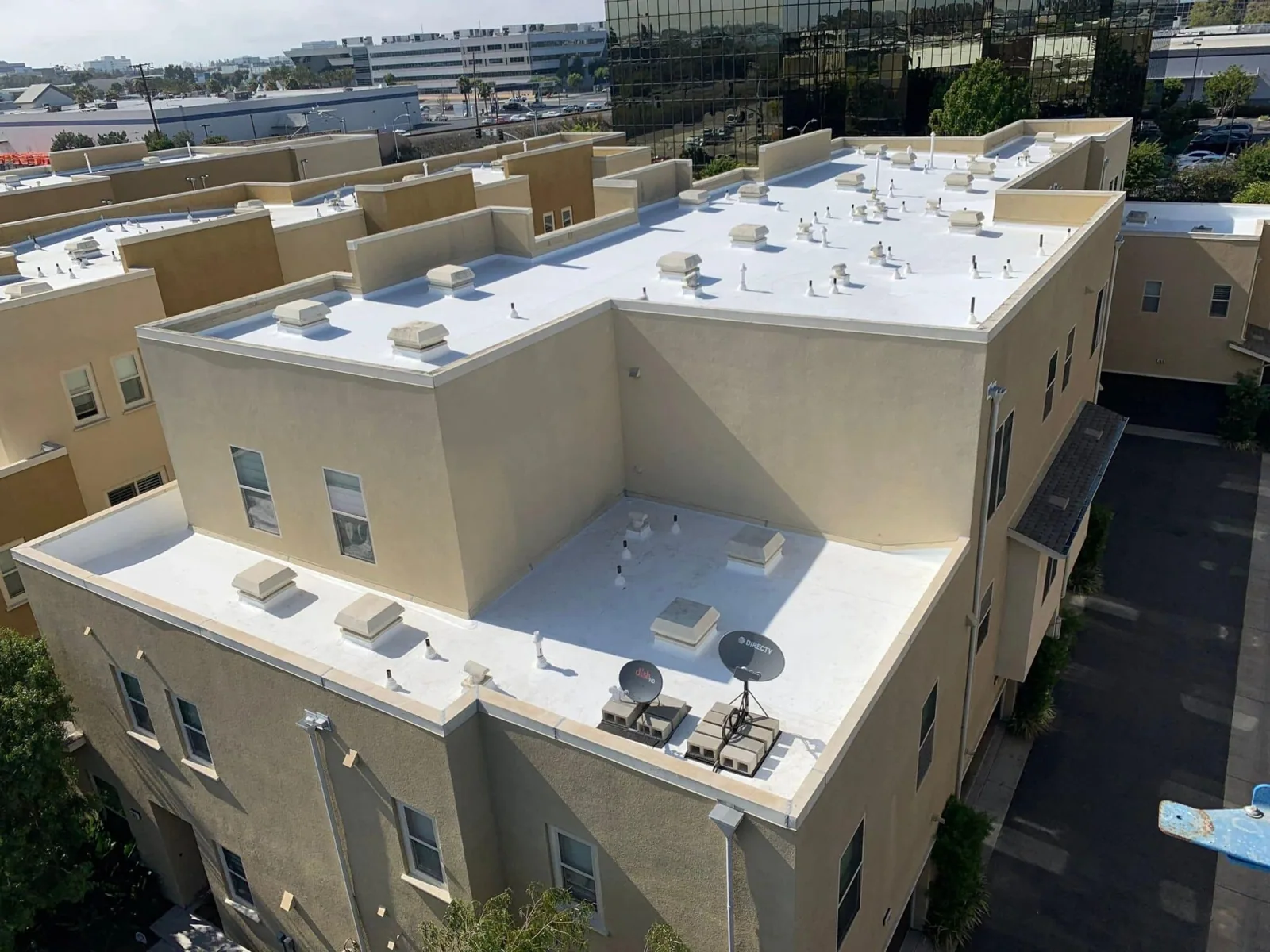
GAF systems, Carlisle assemblies, Johns Manville products and Holcim Elevate systems are evaluated by the product installed, seam method and receiver condition. We inspect exposed edges and previous repairs before selecting material. A brand on an old submittal is useful history, but it does not prove which layer remains on the roof today.
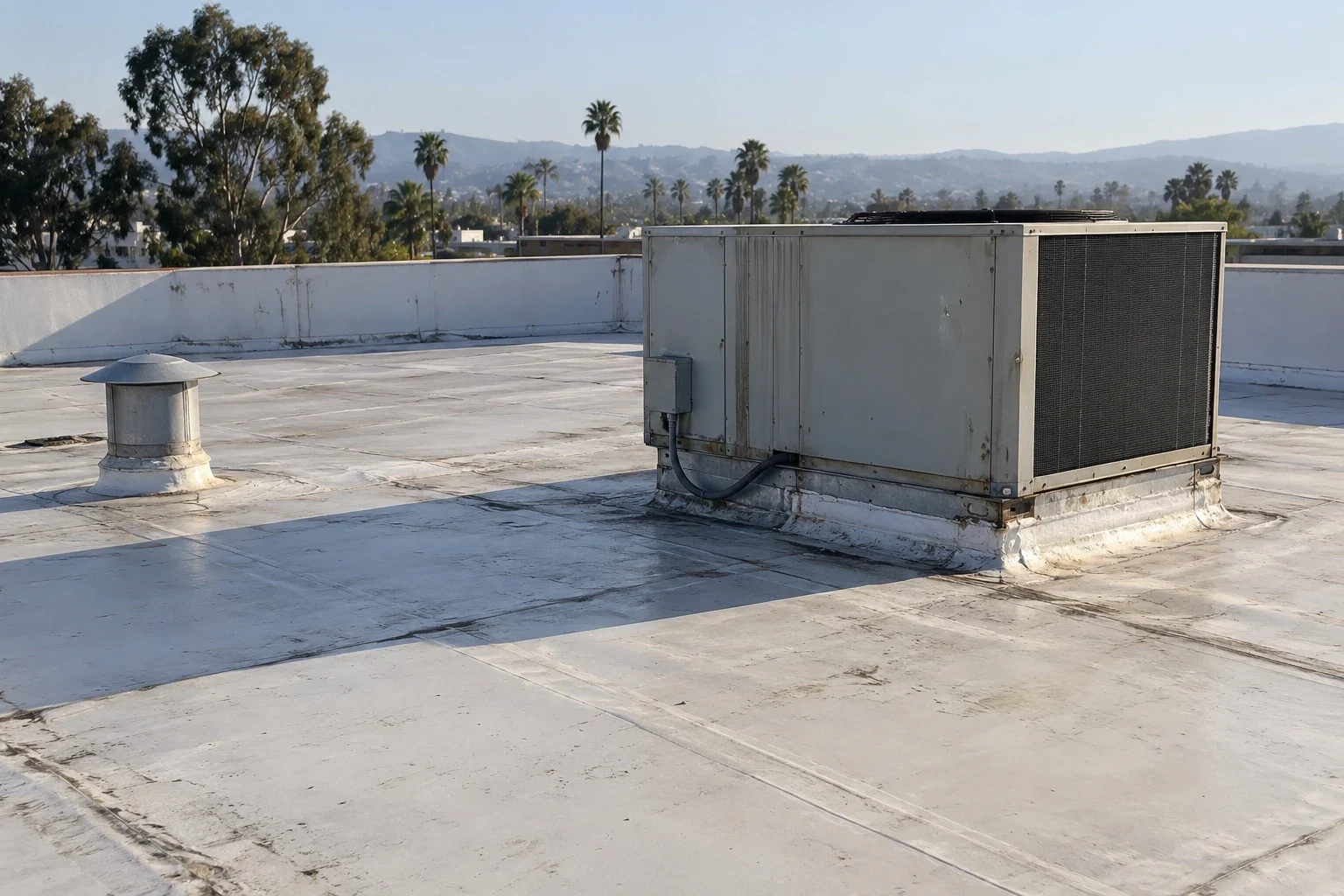
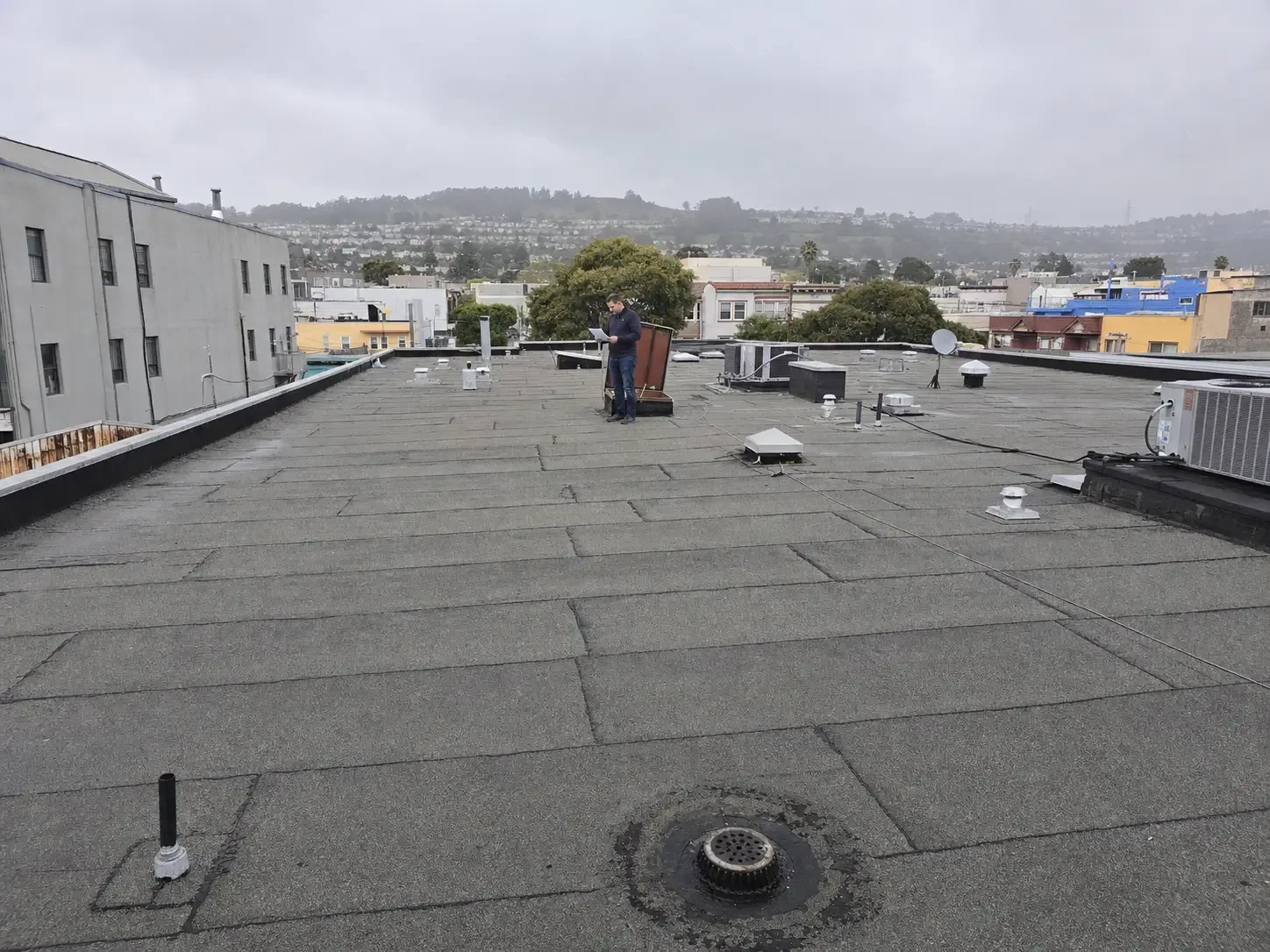
At curbs, drains and wall turns, membrane connects or terminates against another material. A repair has to restore that interface. The Airport Business Center is an identified industrial-plan area, where roof equipment can shape access questions. That land-use fact does not identify any particular system. Inspection establishes the existing detail before work is priced.
A useful submittal names the selected assembly, preparation, attachment and flashing components. A condition record notes where material was used and which adjacent area remains outside the repair. Carlsbad's economy includes a broad life-sciences cluster; at a particular facility, the manager confirms sensitive operations and work windows before access is planned.
We compare options only after drainage, attachment, moisture and substrate questions are answered. A TPO assembly or PVC assembly cannot correct unstable insulation by itself. The scope states what is removed, retained and rebuilt at transitions, then records the areas not opened so later maintenance starts with a clear view of installed work. Product literature can explain intended use, but it cannot identify the layers already installed on a roof. We compare the manufacturer's system details with the field condition, fastening pattern and compatible flashings. If a component or material remains uncertain, that point is resolved before the repair or replacement scope is finalized. This avoids choosing a product on name recognition when the practical question is whether the complete assembly can be installed and maintained correctly.
It can help, but we inspect seams, exposed edges, flashings and repairs. Materials for a current correction must match the assembly present.
Record the identified roof assembly, compatible material, attachment, transition details, preparation steps, and any limits confirmed for the project.
A patch has to bond, weld or seal to the receiving surface. Preparation and the condition of surrounding material affect that connection.
It should identify assembly, attachment, insulation and transition details, along with the preparation and conditions required for installation.
Share the building location, roof history and current condition. We can identify the inspection or work scope that supports the decision ahead.
© 2026 Commercial Roofers Carlsbad. All rights reserved. Privacy Policy | Terms of Service | Sitemap