
Fog can linger after the roof edge clears. In Carlsbad, that difference can affect inspection timing, yet it does not identify which Holcim Elevate membrane is installed or whether a roof is holding water. We start by identifying the material and assembly, then compare the reported symptom with seams, penetrations, drains, and the supporting layers. Holcim Elevate offers multiple commercial families, including EPDM, TPO, PVC, asphalt, and metal systems, so a brand name alone does not settle a repair. Around Carlsbad Research Center and the Palomar Airport Road employment corridor, roof access, equipment, and building schedules differ from property to property. A good scope records those conditions by roof zone and explains whether the next step is a localized repair, moisture confirmation, recover review, or replacement design.
Identify the Installed System
Holcim Elevate’s commercial range includes RubberGard EPDM and UltraPly TPO, along with PVC and other system families. The UltraPly TPO product reference guide describes reinforced membrane options in multiple thicknesses and widths, including fleece-backed and self-adhered variants. Those options are not interchangeable by label alone. A mechanically attached sheet, an adhered membrane, and a factory-adhesive product require different substrate preparation and perimeter detailing. We inspect the edge of the roof, review submittals and repair records, and check any exposed membrane marks before identifying the assembly. Compare an JM membrane family or Carlisle system only after the original build-up is understood. Current technical documents should govern thickness, attachment, fastening patterns, compatibility, and any warranty submittal.
Specification review should connect the selected Holcim Elevate membrane to the complete assembly. The drawings need to show the substrate and board sequence, attachment or adhesive approach, perimeter and corner treatment, drain details, and how penetrations will be flashed. If an UltraPly TPO SA or fleece-backed product is under consideration, current installation guidance controls substrate preparation and environmental limits. We confirm that the building team has resolved transitions, equipment supports, and access paths before the field membrane arrives. A manufacturer data sheet cannot account for a hidden wet layer or a deck that differs from the drawings, so selective verification may still change the scope. During work, the record should track completed zones, weld checks, and any area held until conditions are acceptable. That makes review of the finished system more useful than a material invoice alone.
Trace the Leak Path
The path through a roof assembly can be longer than the interior stain suggests. We mark the room and time of the report, then examine the field, laps, edges, curbs, vents, drains, and any earlier repair in the likely path. On EPDM, seams and flashing details differ from the heat-welded joints of UltraPly TPO. A field repair should therefore start with system identification, not a generic patch kit. Where readings indicate a broader moisture pattern, selective openings help confirm the extent and condition of insulation. A moisture survey helps prioritize those locations when surface conditions support it, and a roof inspection documents the visible findings. Record what inspection established and what stayed inaccessible, then price any follow-up opening as a question to resolve rather than a verified defect.
Evaluate Attachment and Edges
The membrane transfers wind and movement forces through the fastening or adhesive design into the substrate and deck. That makes fastener rows, plates, adhesive coverage, board joints, perimeter zones, and corners part of the same roof question. Holcim Elevate system documentation specifies the assemblies and requirements for its materials; the correct selection depends on deck, height, exposure, design criteria, and current approvals. We do not infer wind capacity from the membrane name. We inspect exposed fasteners, uplift marks, loose metal, and field movement, then compare them with the available drawings. If the roof has equipment concentrated near an edge, a warehouse roof review or curb and support assessment can help coordinate penetration details with the membrane. Every transition receives a detail suited to the documented system.
Compare Repair and Replacement
A repair may be the right work when damage is limited, the surrounding membrane accepts a compatible repair, and insulation and deck conditions remain sound. A wider scope deserves consideration when moisture extends beyond one zone, repairs repeat at multiple transitions, or attachment and edge conditions have deteriorated. A recover option is possible only after reviewing existing layers, wet insulation, structural capacity, drainage, fire and code rules, and system compatibility. We present the conditions behind each option instead of presenting replacement as the default. A recover assessment can test whether existing layers can remain; a replacement plan addresses tear-off and sequence when they cannot. If the existing assembly is UltraPly, a TPO alternative still needs to meet the project’s deck, slope, access, and perimeter requirements.
Check Surface Conditions Before Work
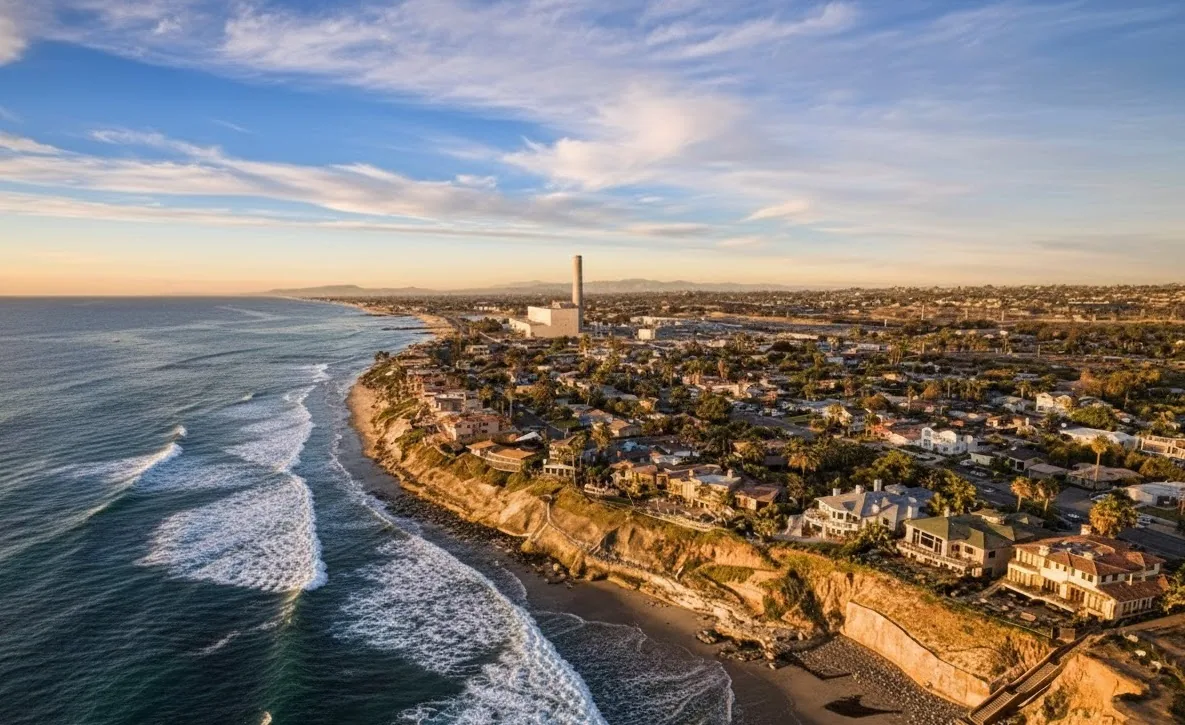
The West Coast marine layer is a low-cloud and fog layer that can persist beneath an inversion. During a coastal roof inspection, that pattern makes it useful to separate condensation on the exposed sheet from water within the assembly. It does not establish corrosion or a defect. At Carlsbad Palomar Airport, the average daily high is 75.8°F in August and 69.2°F across the year; annual highs reach 90°F on 2.9 days on average. Those values describe station conditions rather than roof-surface temperature. We check whether the actual surface is dry enough for the selected primer, adhesive, or weld, and record whether a drain retains water after rain. The Research Center and Palomar Airport Road corridor include varied roof exposures, so work timing is verified at each building.
Maintain the Building Record
Keep the system identification, manufacturer data sheets, approved assembly details, roof-zone map, dated photographs, repair materials, and any test results with the asset file. Note where a seam or flashing was opened, how it was closed, and what adjacent condition remains unverified. If an Holcim Elevate system is under warranty, use the current terms and reporting procedures for that specific roof rather than assuming all product families share one requirement. Facilities teams also need practical access notes, rooftop traffic paths, and instructions for protecting drains and completed work during mechanical service. A condition report helps compare future observations with the original baseline. A scheduled maintenance inspection can revisit drains, edge conditions, and penetrations before the next planning cycle. The record should support a decision, not merely show that someone walked the roof.
Commercial Roofing Questions
Does Holcim Elevate sell only UltraPly TPO?
No. Holcim Elevate lists EPDM, TPO, PVC, asphalt, metal roofing, insulation, and enhancements. The roof’s existing system and project criteria determine which product family can be considered.
Can a contractor identify UltraPly from a white membrane?
Color is insufficient. Product records, labels, sheet details, and exposed edges should be checked before choosing compatible repair materials or installation procedures.
Does a coastal fog layer prove moisture is in the roof?
No. Condensation, ponding, and concealed moisture are different conditions. The inspection combines surface observations with appropriate readings and selective confirmation.
Can an existing Holcim Elevate roof be recovered?
That depends on moisture, deck capacity, drainage, existing layers, fire and code rules, and the proposed assembly. Current manufacturer requirements and the project design must be reviewed.
What does attachment tell an owner?
It shows how membrane and insulation forces transfer to the deck. The attachment pattern, edge design, and substrate need to fit building height, exposure, and approved assembly criteria.
What should be documented after a Holcim Elevate repair?
Record the identified system, location, repair materials, preparation and closure steps, photographs, test findings, and nearby areas that were not opened or could not be checked.