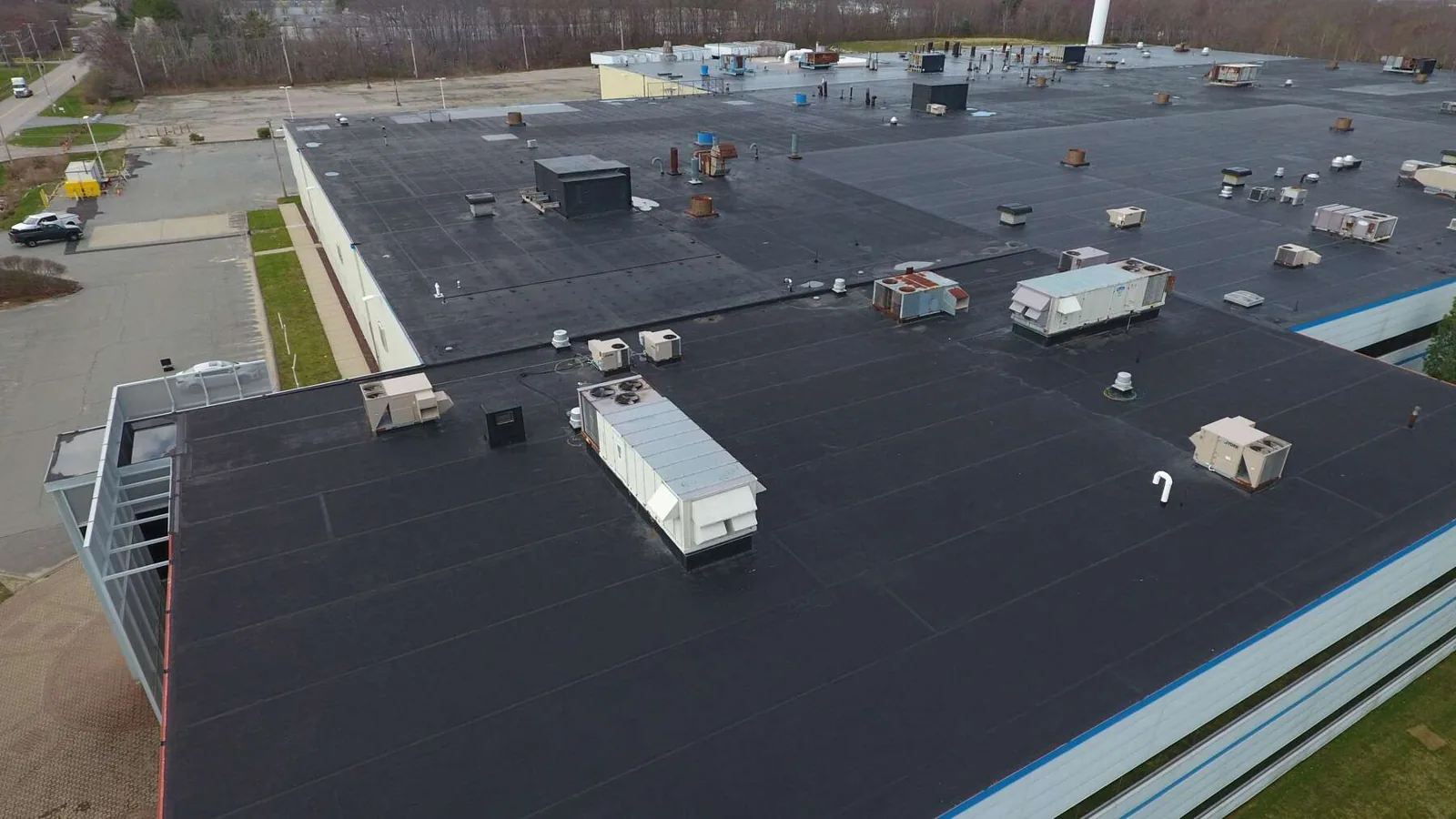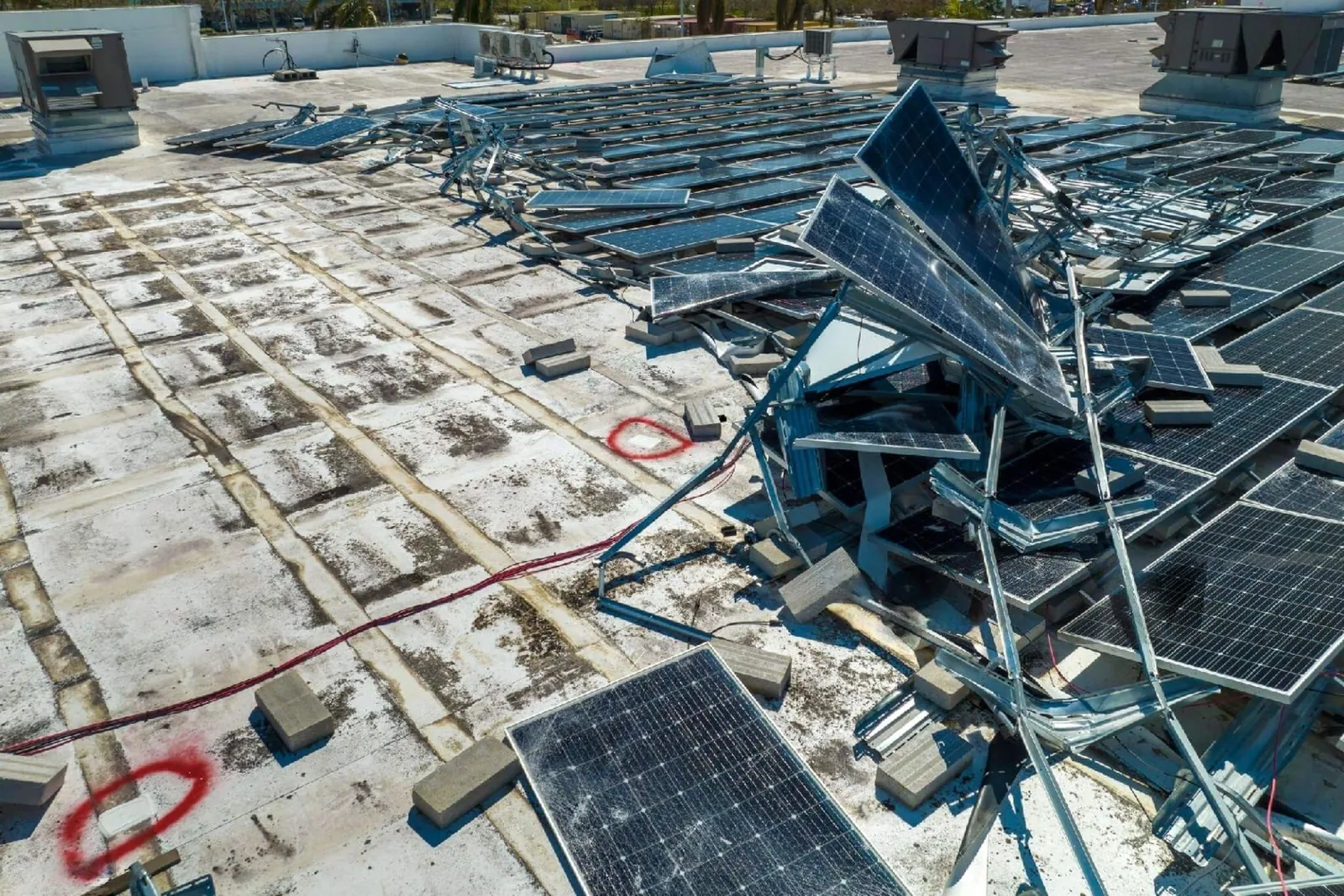
A damaged membrane does not show how far a problem continues below it. We map the opening, check the substrate and nearby details, then decide whether a local repair can hold or a larger area needs attention. The marine layer is a regional coastal exposure, not evidence of roof damage by itself. The inspection connects visible condition, moisture path and material compatibility before setting the scope.
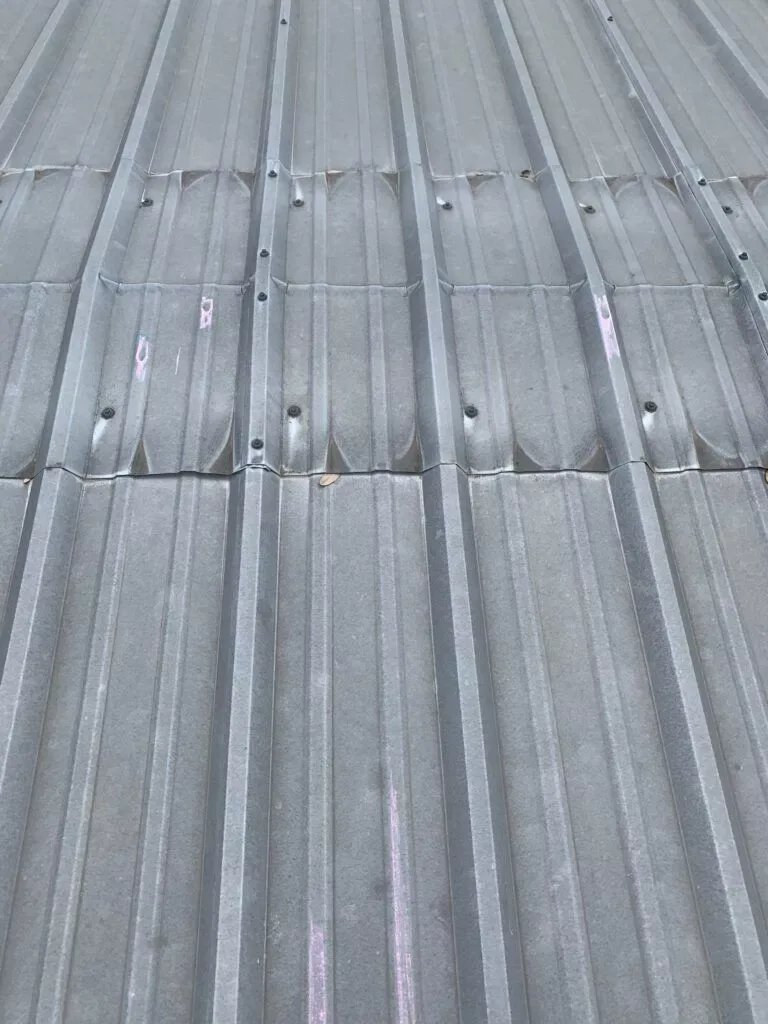
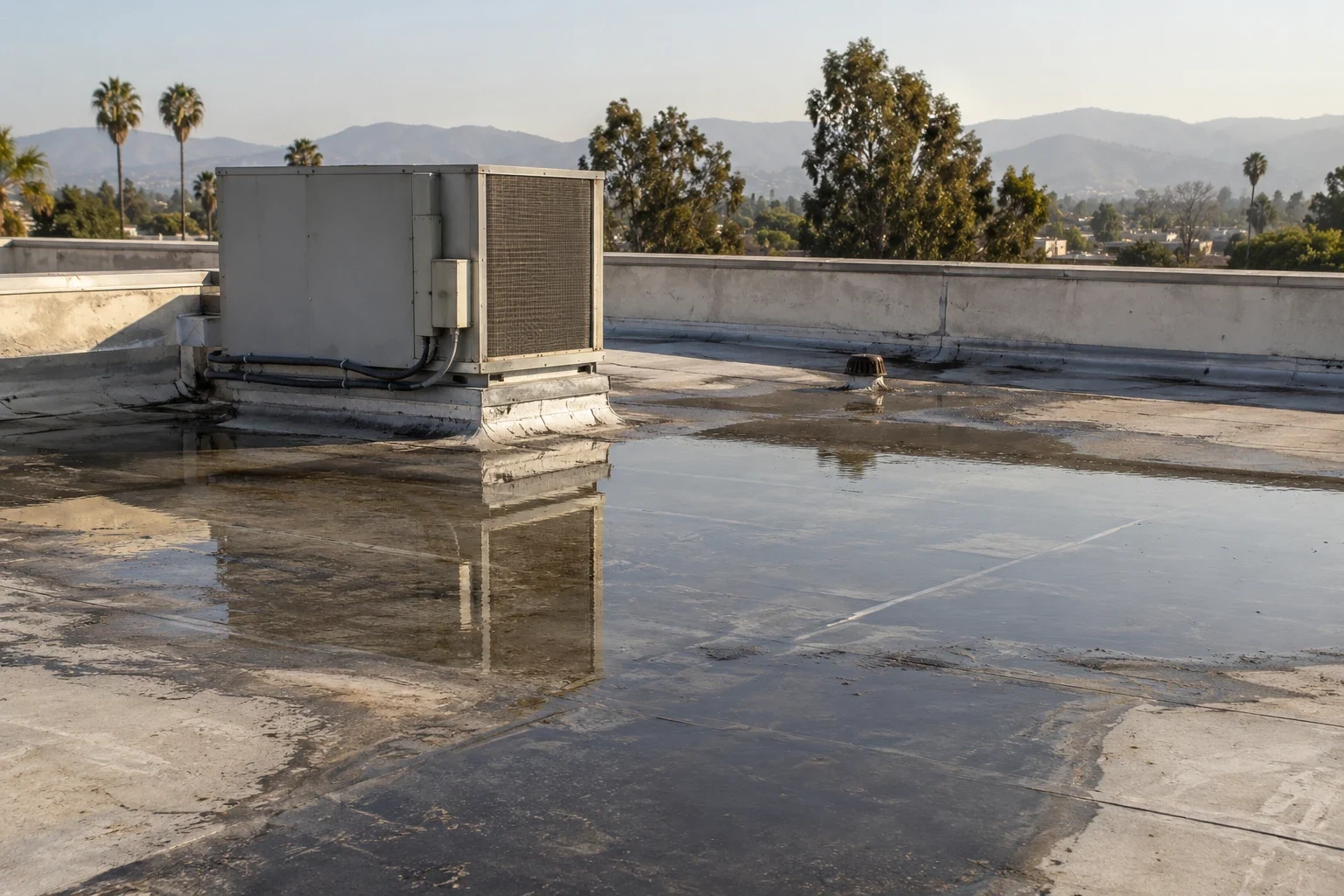
Wind can lift an edge, open a seam or move metal without affecting the entire roof. A wind damage examination records attachment and perimeter details; a ponding water review checks low areas, drain condition and flow path. These findings answer different questions, so a weather report or interior stain is not treated as a complete roof map.
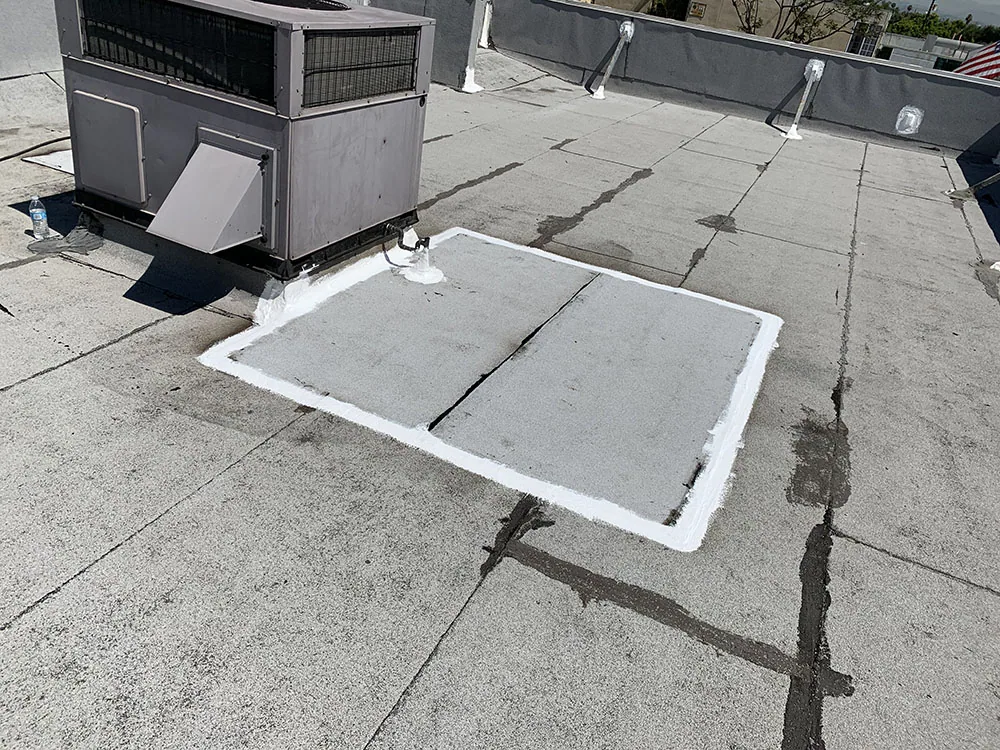
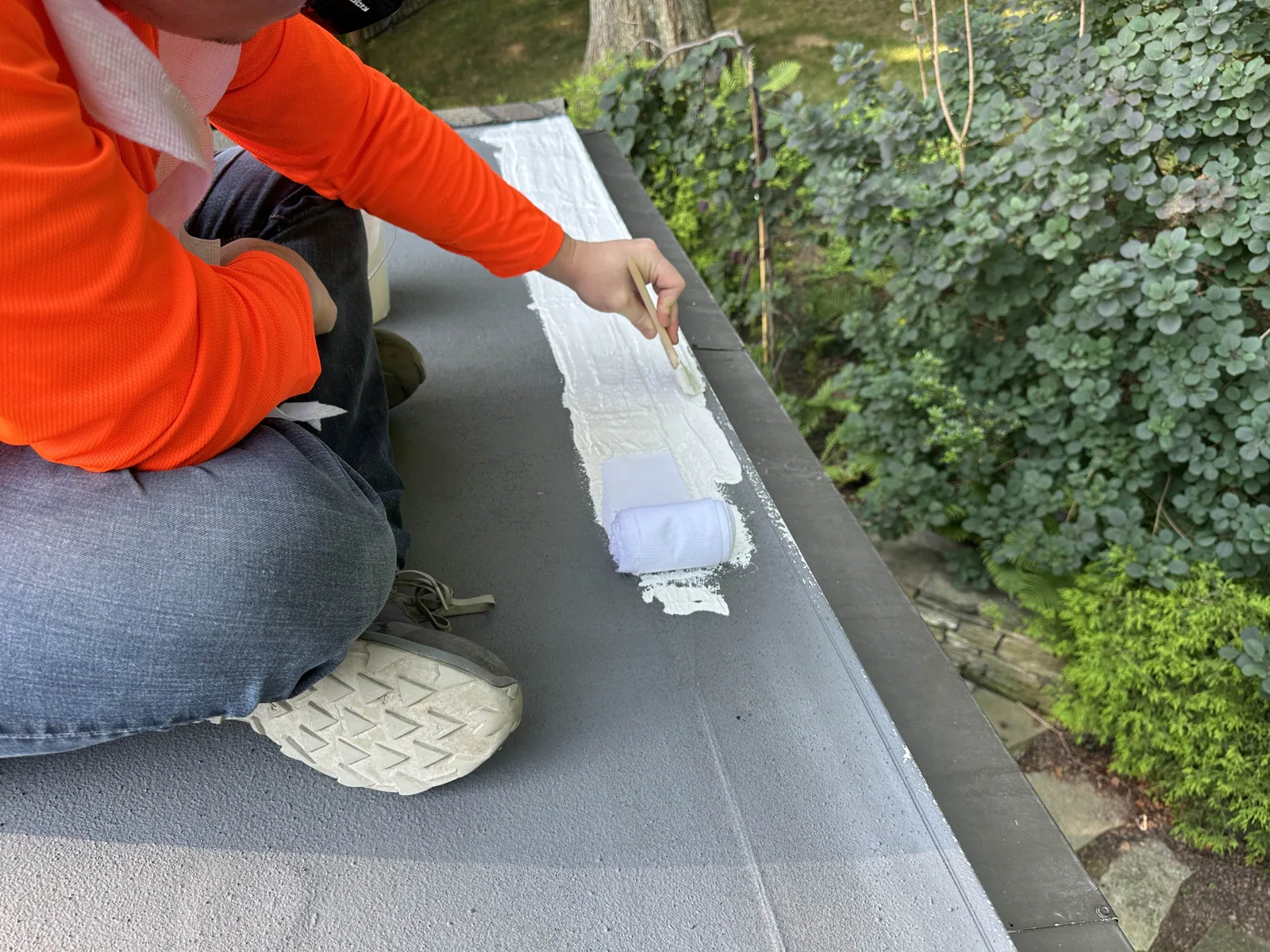
A curb or wall transition can admit water even where the field membrane remains intact. Flashing correction rebuilds a failed transition, while seam repair depends on the material and the weld or bonded lap condition. A puncture scope checks whether the cut reached insulation or deck before selecting a patch boundary.
Water may move along facer or deck before appearing indoors. Thermal screening can help identify areas for confirmation. Fire exposure needs a wider fire damage assessment that considers membrane, insulation, deck, penetrations and suppression water. The Carlsbad Research Center is an industrial-plan area; conditions at a building there still depend on its own assembly and inspection.
Urgent protection can limit additional entry but does not substitute for permanent work. We document what was secured, what needs removal and how the final detail reaches sound construction. The Palomar Airport Road district combines industrial and research activity, a useful setting for discussing access around equipment-heavy properties. Where equipment or occupied operations affect access, the scope reflects the facility's confirmed schedule and safe work path. The closeout records the condition before repair, the material and boundary used, and any related concern left outside the approved scope. If a defect appears near a rooftop unit, drain or parapet, we note the interface that may need coordination. A later visit can compare the same location and determine whether the repair remains stable or another area has changed. That record supports a more deliberate response than repeating a patch without knowing its history.
Only when surrounding membrane, substrate and insulation can support the repair. We inspect below the opening and mark where material remains serviceable.
Not automatically. We check attachment, edges, seams and the extent of affected material before comparing repair with broader renewal.
We review visible membrane and details, then identify what must be examined below. Heat, smoke, water and deck condition each can change the boundary.
We protect the opening where feasible, identify the assembly, confirm compatible materials and document removal or substrate work needed for closure.
Share the building location, roof history and current condition. We can identify the inspection or work scope that supports the decision ahead.
© 2026 Commercial Roofers Carlsbad. All rights reserved. Privacy Policy | Terms of Service | Sitemap