
A roof access request at a data center needs a clear destination, escort plan, and reason for each person going above the occupied space. In Carlsbad, CA, we record the affected zone and the operational controls before inspecting the membrane, drains, and equipment transitions. Water can travel through a roof assembly before it reaches a ceiling or cable route, so the first report is a starting point rather than a diagnosis. The assessment creates a map, photographs, and a bounded repair scope that lets the facility director plan around access restrictions and preserve a reliable record of the roof condition.
Start With the Affected Zone
The first question is which roof section corresponds to the interior symptom, not simply which room appears wet. Deck flutes, insulation joints, structural members, and service pathways can move water laterally. We record the report time, weather context, nearby equipment, and ceiling condition, then compare these details with seams, curbs, penetrations, and drain routes above. A documented roof inspection connects each observation to a roof map, so an owner can distinguish a confirmed opening from a zone that needs more investigation.
Identify Every Existing Layer
A data center roof may include several membrane generations, insulation layers, cover board, and equipment supports added during different projects. We verify the assembly before proposing a tie-in because a patch material must suit the surface and substrate. TPO seams and PVC membrane details require preparation appropriate to the installed system, while older transitions may call for a different repair. Concealed moisture is mapped separately from visible damage, which keeps a surface repair from being treated as a complete fix when wet insulation remains below.
Treat Penetrations as Roof Details
Conduit stands, curbs, pipe supports, antenna bases, and mechanical equipment all interrupt the membrane. Each requires a secure flashing transition that remains serviceable as equipment and roof materials move through temperature cycles. We inspect the membrane turn-up, counterflashing, fasteners, sealant, and surrounding drainage rather than judging a detail from sealant color alone. A curb and equipment support review records which items remain active, which details need repair, and which access controls the facility requires before close-range inspection.
Keep Climate Separate From Diagnosis
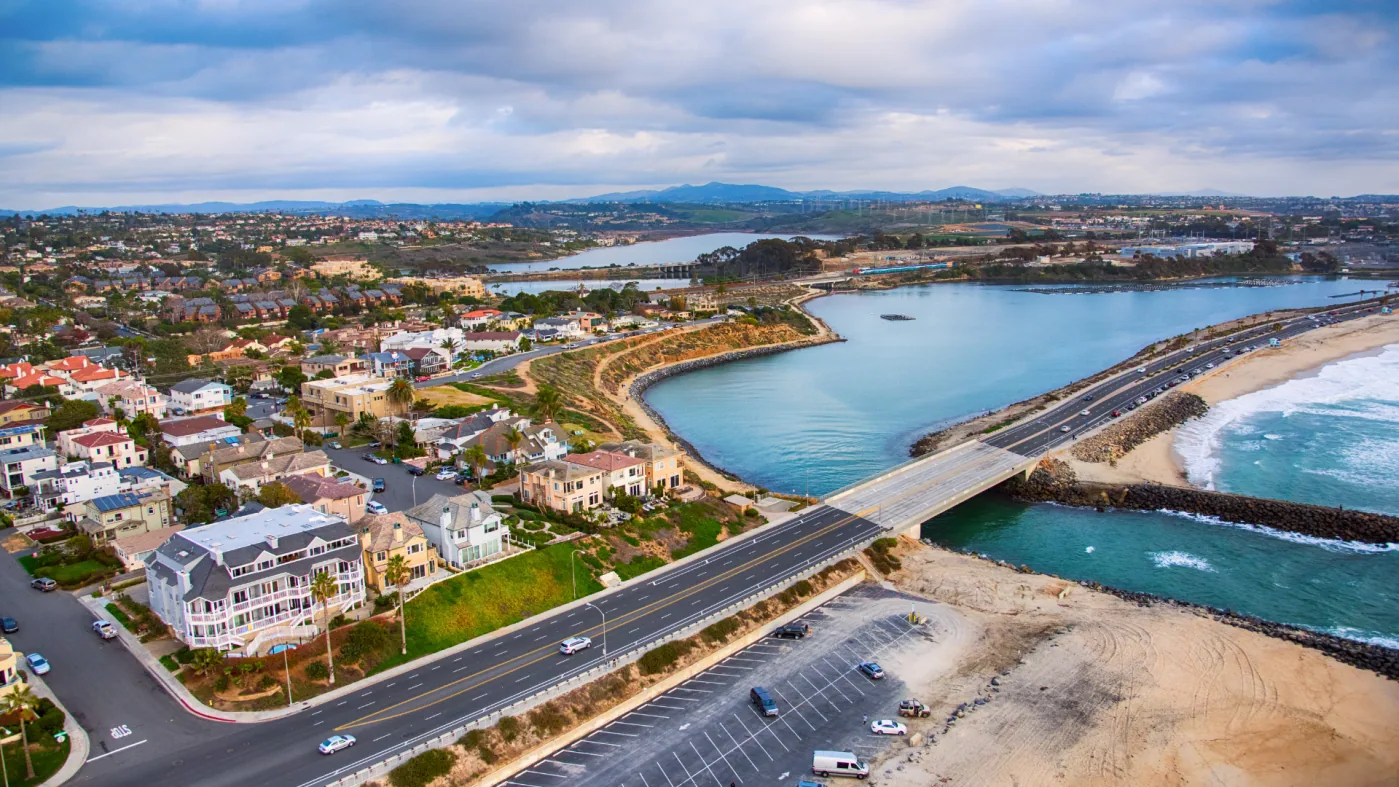
Carlsbad experiences marine-layer cloud and fog beneath an inversion, while local planning records identify industrial areas such as Carlsbad Research Center and the Carlsbad Airport Business Center. These facts locate the facility in its regional context; they do not establish the cause of a specific leak. We compare the timing of moisture with roof slope, shaded sections, seams, and the condition of insulation. This avoids treating exterior dampness as water entry and keeps the recommended work tied to conditions observed on the data center itself.
Limit Unnecessary Access
A roof visit should be scoped to the zones and details that need review. The facility contact can identify escort requirements, restricted paths, equipment clearances, and any documentation needed before access. We coordinate a route that avoids unrelated areas and explain when a drone overview can help with orientation versus when close-range work is necessary. If the inspection identifies active water entry, our emergency response remains available at any hour. The work record notes what could be safely viewed, what was tested, and where additional access would change the diagnosis.
Make the Condition Record Reusable
The roof map should label penetrations, drains, seams, repairs, and observation points consistently. Dated photographs tied to those labels make a later visit comparable, even when another facility contact receives the roof record. The file can note the material installed, the boundary of the repair, and which nearby details remain under observation. A warehouse roof record may use a similar grid method, but the data center’s access and continuity controls stay specific to its facility. We organize the evidence so it supports maintenance planning without implying a broader service interruption.
Set a Controlled Work Boundary
If a repair requires opening the membrane, the scope should state the permitted zone, material movement route, temporary closure method, and closeout inspection. We define the boundary before crews mobilize, then document concealed layers as they are exposed. A manufacturing roof assessment also benefits from documented equipment transitions, but each building has its own access approvals. The plan for a Carlsbad data center separates immediate water control from any capital work, which gives the owner a clear decision point without turning a limited roof issue into an unsupported replacement recommendation.
A useful visit plan begins with a roof map that identifies each equipment zone, transition, drain, overflow route, and prior repair. The owner can mark which areas require escort, which can be inspected during normal access hours, and which need a separate outage or security window. That map helps the field team record where a seam was tested without treating a single observation as proof that the entire assembly is sound. Photographs should include a location reference and a short description of the observed condition, not a conclusion that exceeds the inspection. After review, separate immediate water entry, deteriorated details, maintenance items, and conditions that need monitoring. A written scope should name the roof area, proposed repair boundary, access assumptions, temporary protection, and any concealed conditions that could change the work. The closeout can then give facilities staff a dated record, a follow-up point, and a clear question to answer before a larger capital commitment.
Compare Work With the Same Assumptions
Proposal differences can reflect access controls, the number of penetrations, insulation removal, perimeter details, overhead protection, or a requirement for narrower work windows. We list those drivers with the roof area and assembly assumptions so an owner can compare like scopes. A moisture survey may identify areas for verification, but the work boundary follows field confirmation. When the inspected roof is near the Carlsbad Research Center, local access routes can inform scheduling; they do not change the measured condition or the repair materials required.
Leave the Next Step Unambiguous
A useful assessment names the condition found, the roof zone involved, and the evidence needed before any concealed layer is included in a scope. It should also record access limits, temporary measures, and a follow-up check where the repair boundary meets existing material. The facility director can then decide whether to authorize a local repair, gather additional observations, or compare a larger capital plan. Our recommendation follows the inspected assembly and the data center’s stated controls, with emergency make-safe work available when water entry is active.
Commercial Roofing Questions
Can roof inspection be limited to one secured zone?
Yes. We coordinate escort and access controls, then record which zones were inspected and which were not entered. A drone overview may help locate areas, but close-range checks are still needed to confirm seams, flashing, or concealed moisture.
Does an infrared survey confirm a leak source?
No. It can help identify temperature patterns that merit verification, but it does not by itself establish a roof opening or the extent of wet insulation. We compare survey findings with surface and interior observations before defining repair work.
What should a facility director receive after inspection?
The record should include a roof map, photographs, the affected zone, details checked, material observed, and any access limits. It should separate confirmed conditions from suspected paths and explain what additional inspection would change the repair boundary.
Can crews respond outside normal operating hours?
Yes. Emergency commercial roof response is available around the clock. We confirm safe roof access, limit active water exposure with practical temporary measures, and return to document the permanent repair requirements.
When does a small repair become a capital project?
Repeated failures, widespread wet insulation, deteriorated deck areas, or multiple compromised transitions can justify a broader comparison. We document the affected zones and explain what remains serviceable so the owner can weigh local repair against planned replacement.