
A roof capital plan is only as reliable as the condition basis beneath its cost lines. A spreadsheet that repeats the original installation year across every building can miss later additions, partial replacement, isolated repairs and the physical differences between roof areas. Begin with verified scope, observable condition, access limits and an explicit list of investigations still needed. Then compare maintenance, repair and replacement as distinct alternatives with assumptions the next reviewer can trace.
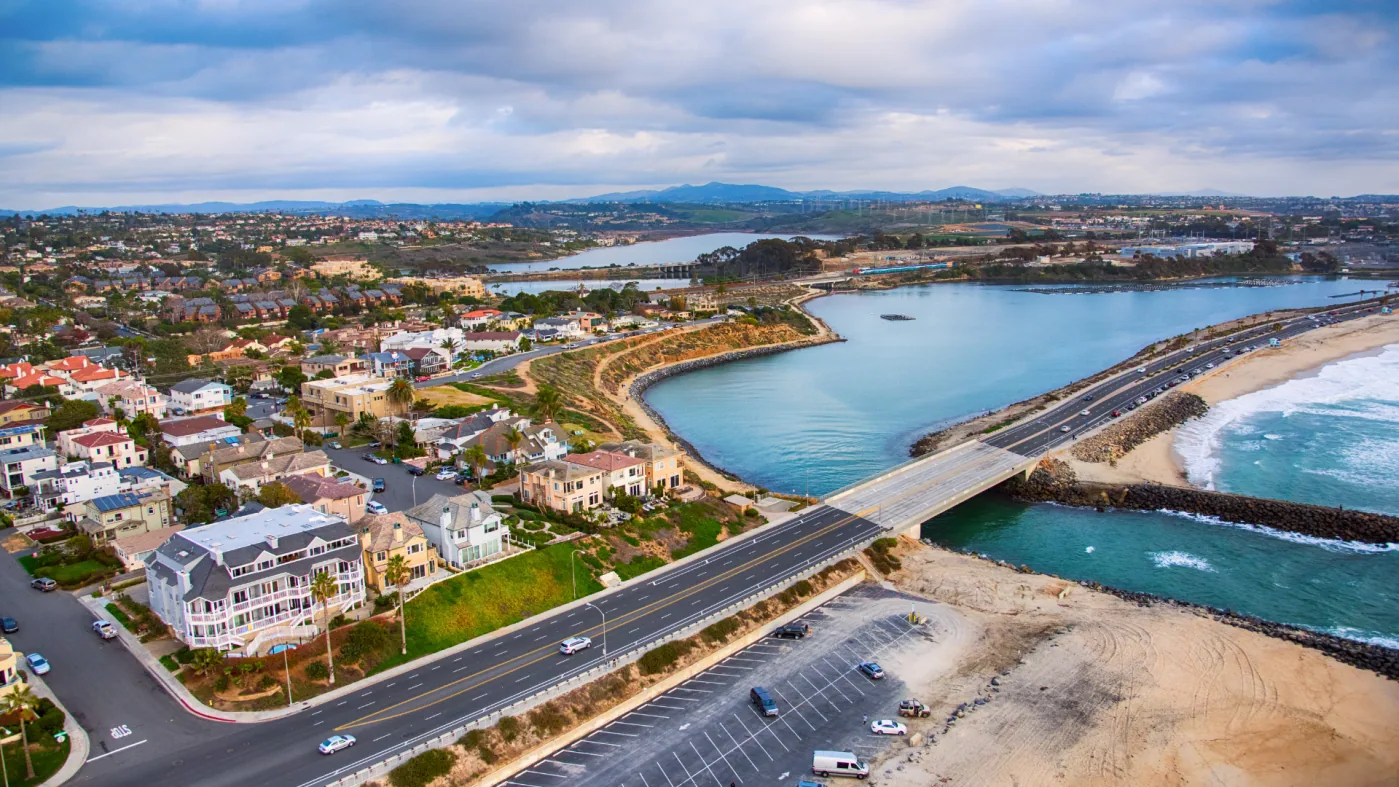
Carlsbad has a substantial and varied employment base, but citywide activity cannot establish the budget or urgency of an individual property. Funding decisions need evidence from the roof itself and approval from the owner’s authorized representatives.
Set the planning boundary
List each parcel and building separately, then identify roof areas that differ in construction, installation period, occupancy, access or repair history. Confirm that the decision horizon matches the owner’s capital cycle. Where a portfolio spans several departments or legal entities, distinguish who controls the budget from who supplies operating information and who can approve roof access. Carlsbad Airport Business Center is another named industrial-plan setting; use its district identity for orientation only.
Carlsbad Research Center is a distinct employment district. Its name may orient a portfolio map, but it is not a site inspection. Avoid using district identity, estimated development or a remembered project date as a substitute for the roof boundary and current condition evidence.
Build the condition basis before pricing
Assemble drawings, warranty paperwork, invoices, service tickets, tenant reports and prior photographs. Give every record a date, location and source, and note whether it describes the whole roof or a limited section. Compare the available documents with accessible construction. Identify missing quantities and conflicting records rather than selecting the most convenient version as fact.
A condition report with mapped observations can help establish repair boundaries, drainage questions and sampling limits. A broad recommendation should follow adequate investigation for its proposed area. If concealed deck, insulation or attachment remains unknown, make the next step an authorized examination and show its cost separately from assumed installation work.
Compare alternatives on the same scope
For each option, state what will be removed, retained, prepared, installed and documented. Identify edge, wall, drain, curb and penetration details that remain in the work. List exclusions, allowance logic and work expected from other trades. A repair alternative and a replacement alternative are not comparable if one includes access, substrate correction and closeout while the other leaves those items undefined. A useful comparison also records who owns each open item, when that input is due and whether review time precedes procurement. Keep contingency assumptions visible so a later adjustment can be tied to a specific investigation rather than treated as an unexplained increase. Mapped condition evidence remains a separate input.
Schedule protection as its own choice. A limited leak response may address immediate water entry but leave broader deterioration unresolved. A coating or overlay may depend on compatibility, attachment and moisture findings. Replacement scope should describe those decision points before it becomes a budget line that implies an approved design.
Sequence projects by evidence and consequence
Order work using documented exposure, interior impact, condition extent, operational constraint and the time needed to resolve uncertainty. A verified opening near sensitive operations may require temporary protection while a broader scope is developed. A low-priority area might wait for planned access, but only when the condition review supports that timing. Record the basis and the person accepting each interim arrangement.
Carlsbad has employment in manufacturing, health care and professional services. Those industries can have distinct operating needs, but a sector label does not establish an individual tenant’s tolerance for shutdown, dust or access. Confirm site-specific hours and affected systems directly with the responsible property representative before fixing sequencing assumptions.
Forecast costs with the uncertainty visible
Separate investigation, design or consulting, temporary measures, construction, other-trade coordination and future maintenance. Show the date and source behind any escalation assumption. If quantity is not measured, label it as an allowance and state the method by which it can be reconciled. Preserve the difference between a planning estimate and an accepted contractor scope.
Include scenarios for findings that could change the project: wet insulation beyond the visible report, deck repairs after opening, an incompatible existing surface or a detail that needs redesign. Assign those items a decision owner and a trigger for refreshing the estimate. This lets finance compare a known scope with an unresolved risk instead of treating both as fixed values.
Coordinate approvals and live operations
Before a project enters a funded year, confirm access requirements, tenant communication, equipment service, staging, noise constraints and protection of active operations. Identify who will approve shutdowns and who will verify restoration. Where a technical detail requires design, code review or manufacturer input, specify that review as a dependency rather than allowing a budget assumption to silently become field direction.
For a Carlsbad project, confirm current permit requirements with the local building authority because applicability can depend on permit date and scope. The project team should verify the current requirements with the permitting authority. A capital calendar cannot determine which edition applies to an individual permit.
Keep plan changes controlled
Give every budget line a status such as investigation, draft scope, approved design, bid, committed, completed or deferred. Link it to the relevant roof location and closeout evidence. When a roof report changes the expected extent, preserve the former basis and document why the amount moved. This record helps owners compare forecast changes without mistaking a revised estimate for a change in condition.
Assign a planning owner, technical reviewer, site contact and approval authority. State how frequently assumptions will be revisited and which events prompt an earlier review. An asset record can keep accepted work and condition history available for later cycles; the capital plan decides funding sequence and remains subject to actual authorizations.
Before the budget closes, mark funded work, deferred work, temporary protection, unresolved access and required investigation. Identify documents needed before bidding and the next date at which the scope should be reviewed. If an alternative depends on moisture mapping or test cuts, reserve the time and authority for that assessment rather than carrying a fixed replacement amount forward as if the question were already resolved.
Reconcile completed construction against the approved scope and capture changed conditions. Keep remaining recommendations separate from closeout items. A defined maintenance schedule can provide later observations, while Carlsbad planning context supplies broad orientation only. The next capital decision should rely on current property evidence, not a city statistic or old estimate.
Commercial Roofing Questions
What information should a roof capital plan start with?
Use a current roof-area inventory, available construction records, condition findings, access limits and a list of unresolved investigations. Label assumptions and their source.
Should repair and replacement estimates be compared directly?
Only when both alternatives define similar boundaries, preparation, details, allowances, exclusions and closeout. Keep different scope assumptions visible.
How should uncertain deck or insulation conditions be budgeted?
Describe the unknown, identify an authorized investigation and show the possible cost treatment separately. Do not present an unexamined allowance as a verified quantity.
Can local economic data set the roof budget?
No. Regional economic context may describe the city, but project costs and timing require property-specific condition and owner approval.
Who confirms applicable building code?
The project team should verify the permit date and project scope with the applicable city authority and qualified design professionals.
When should a forecast be refreshed?
Refresh it after an inspection, controlled opening, scope approval, bid, change in operations or finding that alters quantity, preparation or sequence.